

Invisalign vs braces: which suits adults and teens?

Clear aligners like Invisalign suit many adults and teens with crowding, gaps and bite problems. A dental assessment is what decides whether Invisalign or braces suits your teeth.
This guide sets out how the two compare in daily life, when each tends to suit, and what to expect at an Invisalign consultation at our Bowral practice. It is general information, not a diagnosis. Your own teeth, gums and bite decide what will work.
What is the difference between Invisalign and braces?
Both work by applying gentle, steady pressure that moves teeth into a new position over time. The difference is how that pressure is delivered.
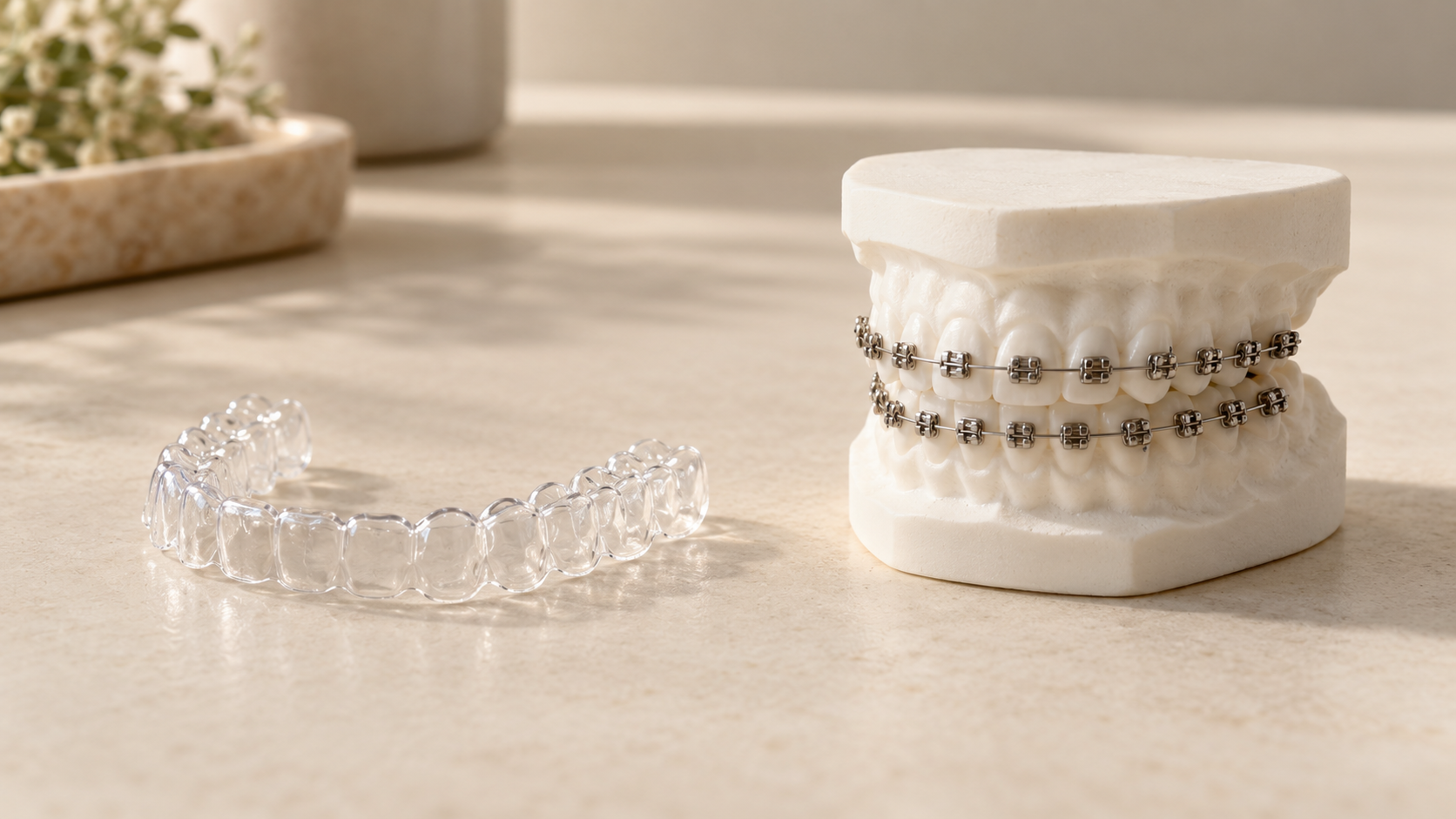
Invisalign is a series of custom-made clear trays, called aligners, that fit over your teeth. Each set is shaped slightly differently from the last, so your teeth move a small amount with each change. You take the aligners out to eat, drink anything other than water, and brush. At our practice, your progress is checked every 4 to 6 weeks.
Braces are brackets bonded to the front of the teeth and joined by a wire. The wire is adjusted at regular appointments to keep the teeth moving. Braces stay on the whole time until they are removed at the end of treatment.
Invisalign vs braces at a glance
| Invisalign | Fixed braces | |
|---|---|---|
| How they look | Clear trays that are hard to notice at a normal distance | Metal brackets and wires are visible |
| Removable | Yes, for meals, drinks other than water, brushing and flossing | No, they are only removed at the end of treatment |
| Daily commitment | Wear around 22 hours a day and change trays on schedule | No daily removal; care with food and cleaning |
| Eating | No food restrictions, because trays come out for meals | Hard, sticky and chewy foods tend to break wires and brackets |
| Cleaning | Brush and floss as usual, and clean the trays | Brushing around brackets takes longer; flossing needs threaders or small brushes |
| Appointments | Progress checks every 4 to 6 weeks at our practice | Regular adjustment visits |
| Comfort | Pressure for a few days with each new tray; no wires to rub | Soreness after adjustments; brackets can rub the cheeks and lips |
| Biggest risk to progress | Not wearing the trays enough | Broken brackets or wires that need repair |
| After treatment | Retainers to hold the result | Retainers to hold the result |
When is Invisalign a good fit?
Invisalign can treat many common orthodontic concerns, including crowded teeth, gaps, overbites and underbites. It tends to suit people who:
- want a discreet option for work, social events or photos
- like being able to take their aligners out to eat without changing their diet
- find it easier to keep teeth and gums clean without brackets in the way
When are braces the better option?
Invisalign suits most adults and teens. Fixed braces may be the better choice when:
- a growing jaw needs closer specialist management
- unerupted teeth need surgery to expose them
- the bite problem is very severe
If braces would suit you better, we will tell you at your consultation and explain your options. Getting the right treatment matters more than which one we provide.
Invisalign or braces for adults?
Adults considering straightening usually weigh up the same few things: how the treatment will look at work, and whether it will fit around meals and meetings. Age on its own is rarely the deciding factor. What matters is the health of your teeth and gums and the type of movement you need.
A few adult-specific points are worth raising at your consultation:
- Existing dental work. Crowns, bridges, large fillings and missing teeth all affect how teeth can be moved and are factored into the plan.
- Gum health. Teeth need healthy gums and bone around them before they are moved, so we check this first and treat any problems before straightening begins.
- Your schedule. Aligners suit busy adults who prefer fewer adjustment-style visits.
- Your goals. If your main concern is the shape or colour of your teeth rather than their position, a broader plan may suit you better. Our page on smile makeovers explains how straightening can combine with other treatment.
Invisalign or braces for teenagers?
For parents, the question is usually less about appearance and more about responsibility. Aligners suit teens who will reliably wear them, keep them in their case when they are out, and put them back in after meals.
For teenagers, success with aligners comes down to three things:
- being consistent in wearing their aligners
- attending regular appointments
- following the aligner schedule as advised by Dr Arora
An assessment will show whether a teenager's teeth and bite suit aligners, and whether a referral to a specialist orthodontist makes more sense.
Which one is faster?
There is no single answer, because treatment time depends on how far the teeth need to move and how complex the movement is. Aligners use gentler pressure, which some people find more comfortable. With Invisalign, how consistently the trays are worn has a direct effect on how long treatment runs.
You will get an estimated timeframe for your own case at your consultation, along with what could make it shorter or longer.
Does Invisalign hurt less than braces?
With Invisalign, most people feel pressure or tenderness for a few days each time they move to a new set of aligners, and it eases as the teeth adjust. With braces, soreness tends to follow each adjustment, and brackets and wires can rub the inside of the lips and cheeks until those areas toughen up.
Many people find aligners gentler day to day because there are no wires to rub, but comfort varies from person to person.
What is daily life like with each option?
Day to day, the two treatments ask different things of you.
With Invisalign, your routine changes around meals. The aligners come out when you eat or drink anything other than water, and go back in after you brush. Coffee, wine and meals out are all possible, but each one means taking the trays out. Most people settle into the rhythm within a couple of weeks. Every so often you move to a new set of aligners, and you visit us for progress checks.
With braces, the brackets and wire stay in. The trade-off is what you eat and how you clean. Hard foods such as nuts and crusty bread, and sticky foods, can break brackets or bend wires. Brushing takes longer because food collects around the brackets, and flossing needs threaders or small interdental brushes. You also visit for adjustments.
Speech can feel slightly different for the first few days with both aligners and braces. Both usually settle quickly.
What are the risks with Invisalign and braces?
All orthodontic treatment carries some risk, and your dentist should explain how these apply to you. The main ones to be aware of are:
- Teeth moving back after treatment. This can happen with either option if retainers aren't worn as advised.
- Decay and white spots. Food and plaque trapped around brackets, or held against the teeth under aligners if you don't brush before putting them back in, can lead to decay or marks on the enamel.
- Gum irritation. Brackets and wires can irritate the gums, particularly if cleaning is difficult. Aligners cover the teeth and have no brackets or wires to rub against the gums.
- Discomfort. Pressure and tenderness are normal for a few days at a time with both options.
Good cleaning habits, attending your check-ups and wearing retainers as advised reduce most of these risks.
What do they cost?
Costs depend on the individual case, so a fair comparison needs a plan for your own teeth. Our guide to the cost of Invisalign explains what the price includes and what changes it, and our fees chart lists prices for other treatments.
Health fund cover for braces and aligners depends on your fund, so it is worth checking with us before you start. We accept all major health funds and offer HICAPS for on-the-spot claims, and there are payment plan options to spread the cost.
What happens after treatment?
Whichever option you choose, the work does not end when the teeth reach their new position. Teeth can drift back over time, which is why retainers are part of every plan. We will fit your retainers at the end of treatment and explain how long and how often to wear them.
How do you decide which one is right for you?
The simplest way is an assessment. At an Invisalign consultation at The Grand Dental Surgery, you will:
- talk through your goals with Dr Shekher Arora
- have your teeth, gums and bite checked as part of a complimentary assessment
- have digital scans taken, which will be used to create a digital simulation of how your teeth could move
- get an honest view of whether aligners suit your case
- if you want to go ahead, approve your treatment plan whenever you like
A digital simulation shows how teeth are planned to move. It is a planning tool but not the final result, as results vary between patients.
Frequently asked questions
Is Invisalign better than braces?
Invisalign suits many adults and teens with crowding, gaps and bite problems who can wear aligners consistently. Fixed braces can suit some complex tooth movements better. An assessment decides which option fits your teeth.
Can you eat with Invisalign in?
Aligners come out for eating and for drinking anything other than water, then go back in after you brush. With braces you eat with them in but avoid some hard and sticky foods.
Do you need a retainer after Invisalign or braces?
Yes. Teeth can drift back after any orthodontic treatment, so a retainer is part of the plan either way.
Is Invisalign suitable for teenagers?
Yes, if the teen will reliably wear the aligners as advised.
Can adults get Invisalign?
Yes. Adults can get Invisalign, and age on its own is rarely a barrier. What matters is the health of your teeth and gums.
Does Invisalign hurt less than braces?
Most people feel pressure for a few days with each new aligner. Braces can cause soreness after adjustments, and brackets can rub the inside of the cheeks while you get used to them.
Talk to us about straightening your teeth in Bowral
If you are weighing up Invisalign and braces, a consultation is the quickest way to find out what suits your teeth. We offer a complimentary assessment and scans, which will give you a very good idea of whether Invisalign is the right choice for you. You can book online or call us on (02) 4862 2162. Read more about Invisalign at our Bowral practice.
The Grand Dental Surgery, Suite 16, The Grand Arcade, 295 Bong Bong Street, Bowral NSW 2576. Phone (02) 4862 2162. Open Monday to Friday, 9am to 5pm.
Treatment details reflect The Grand Dental Surgery's own Invisalign process, October 2026. This article is general information and does not replace an individual assessment. Invisalign is a trademark of Align Technology.


